
 Posted by
 Hello lovelies!
Ideas have been flowing in Lucylu dreamsville and so my hands have been busy crocheting, knitting, painting, doodling, printing and embroidering! It has been exciting, fulfilling and refreshing to be creating and sharing whatever brings me joy.
What has felt new and wonderful and that has become the central focus from which I am exploring some of my favourite crafts is stencilling. The possibilities with stencils are so many: I have been using them on paper and fabric so far, with wood and ceramics next on my list.

I have designed my first stencil set, ‘Shine’, inspired by the sun and how her light and warmth in Spring make me feel hopeful and energised after the darkness and cold of Winter.
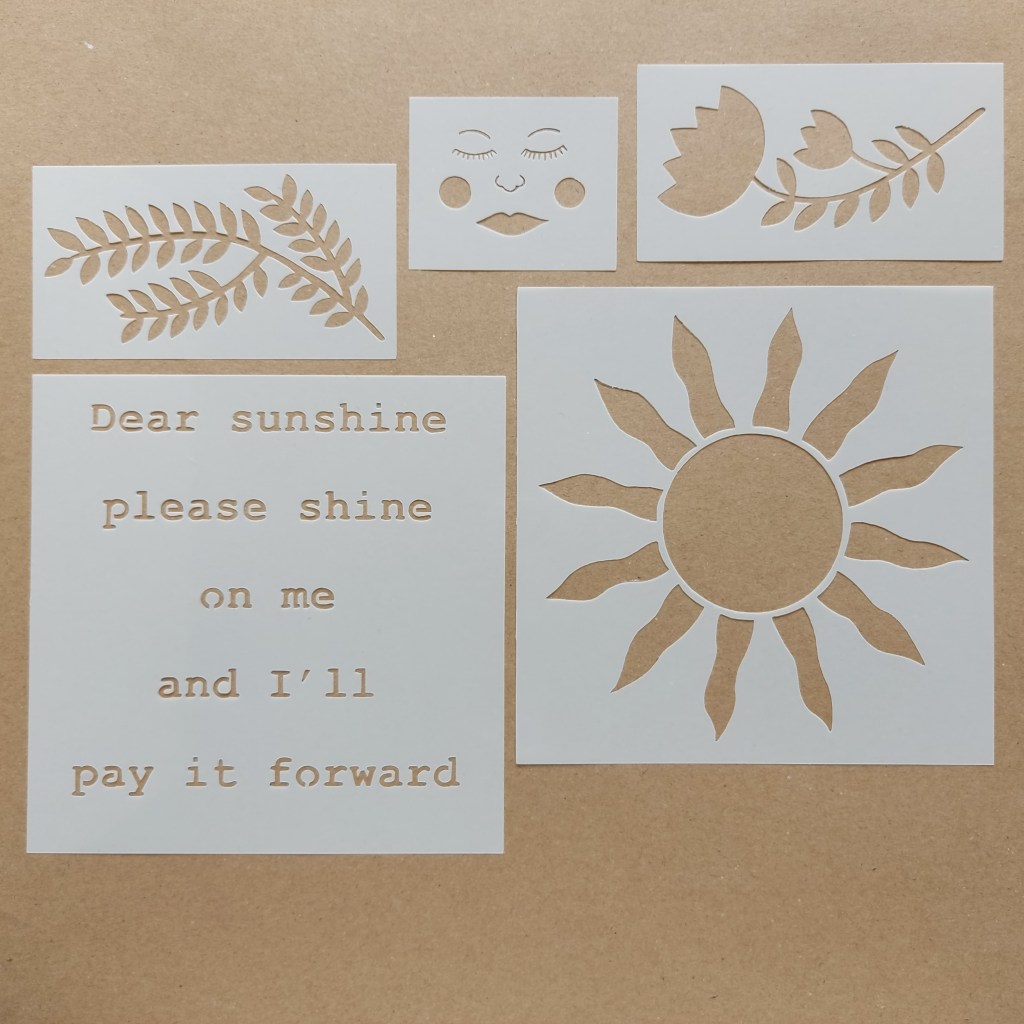

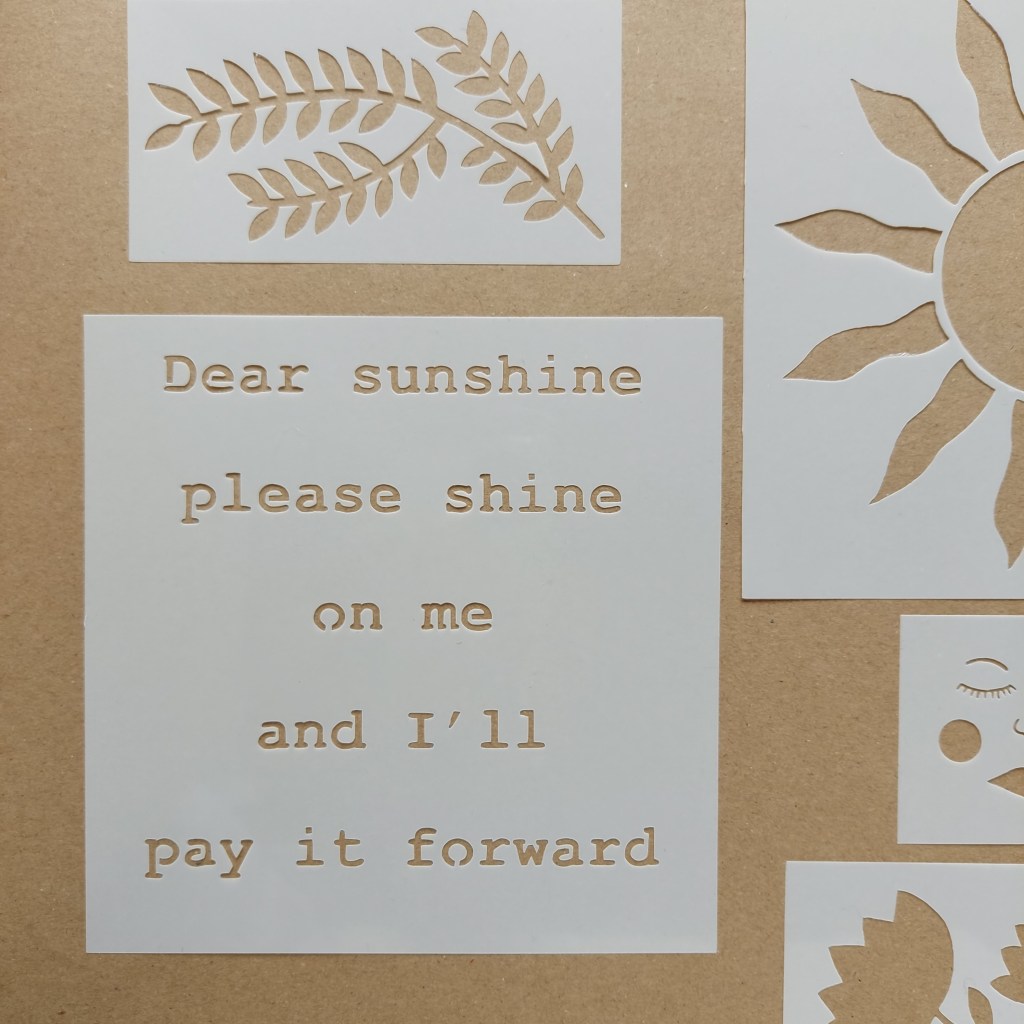
And……..you can buy it here! It comprises of 5 stencils designed to be used together or separately as you wish and you can use them in a variety of projects. I have outlined the first of these below and the remaining projects will be in my next blog post (part 2) next week. There was just too much gorgeousness to pack into one blog post!
But first a few tips on getting started with stencils:
Stencils are made of a variety of materials. One of the most popular is Mylar, which is a type of polyester or plastic film. You can get it in several thicknesses. My stencils are cut using 125 micron Mylar.
After designing my stencils, I use a Cricut machine to cut them. Stencils can also be cut using a craft knife, although different stencil materials will yield different results. For sure it is easier to cut paper or card than plastic, but stencils cut with the former may not be able to be used multiple times. I am interested in trying out freezer paper and oiled manila paper/card, which is water resistant.
Plastic stencils can be washed with soapy water. Try and wash them as soon as possible after use. They do not tear or distort too easily but it is important to be gentle. I try and keep them flat and rub with my fingers or palm towards the empty spaces. Dry them flat.
Depending on how the stencil is to be used, you may need to add a repositionable adhesive to the back, such as this spray. Test it out on your material first. I use repositionable adhesive when printing onto paper/card or fabric, i.e. filling the empty spaces with paint/ink. After stencils have been washed, they may still be adhesive but eventually they will need another coat.
When printing with my stencils, I use a special stencil brush called a stippling brush. Other tools can also be used such as sponges, rollers and spray cans. Use an up and down motion to load paint onto the stippling brush evenly before you begin. If too much paint is loaded, it may bleed beneath the stencil. The best thing to do is practice and you will learn what ‘just enough’ is. Use the same up and down motion to print.
To print on fabric, I use fabric paints or screen-printing fabric paints, both of which I have found can also be used on paper/card.
I also use my stencils to create pencil or pen lines, either onto already patterned/water coloured paper or onto plain paper, which I then paint and/or doodle – examples below! These are the watercolours I am currently using and I love these black pens and these white gel pens for adding detail and doodling.
In this blog post, part 1, I am sharing a few projects using stencils on paper. In part 2 (next week), I will be stencilling on fabric.
For the following projects, I transferred the stencil designs onto paper for use in my new art journalling practice (more on that soon!).
Using stencils on paper:
Printed paper (i.e. filling the empty spaces of the stencil with paint)
For this project I sprayed repositionable adhesive to the back of the ‘shine’ stencils (sunshine, words and botanicals) and printed directly onto watercolour paper, using a stippling brush.


I layered the words on top of one sunshine and the botanicals on top of another, drying the layers in between. For the botanicals, I forgot to add eco tape around the stencils before printing as you can see, but perhaps that adds a certain handmade charm to it…
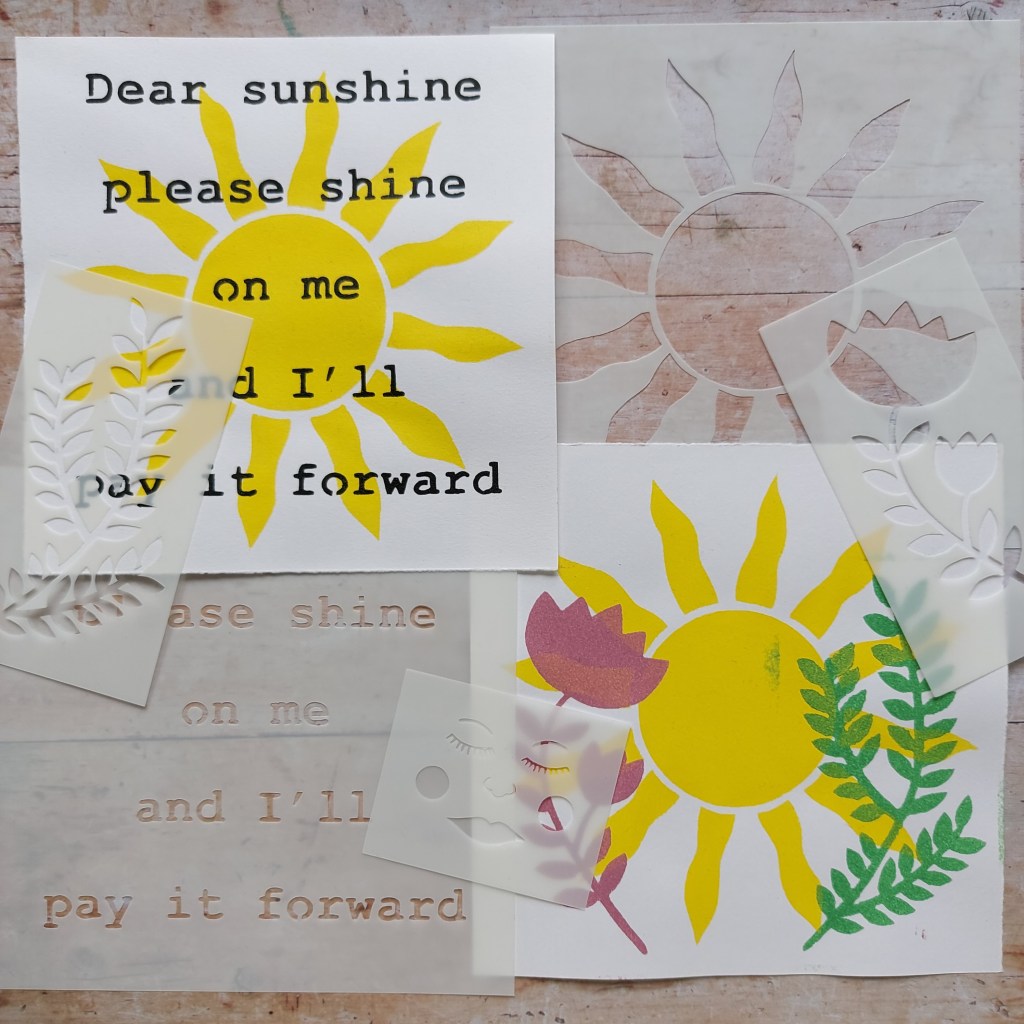
With a different layout and larger paper size (such as A4), I think this could make a wonderful print.
Outline onto water coloured paper
I created 2 versions of this one:
For the first, I added the markings and outlines using the stencils and a black pen, directly onto paper I had already painted with watercolours. I used a thin black marker for the the tiny lines such as the nose outline, the eyelashes. and the eyebrows. I then doodled some pretty detail – squiggles, curves, dots and so on!
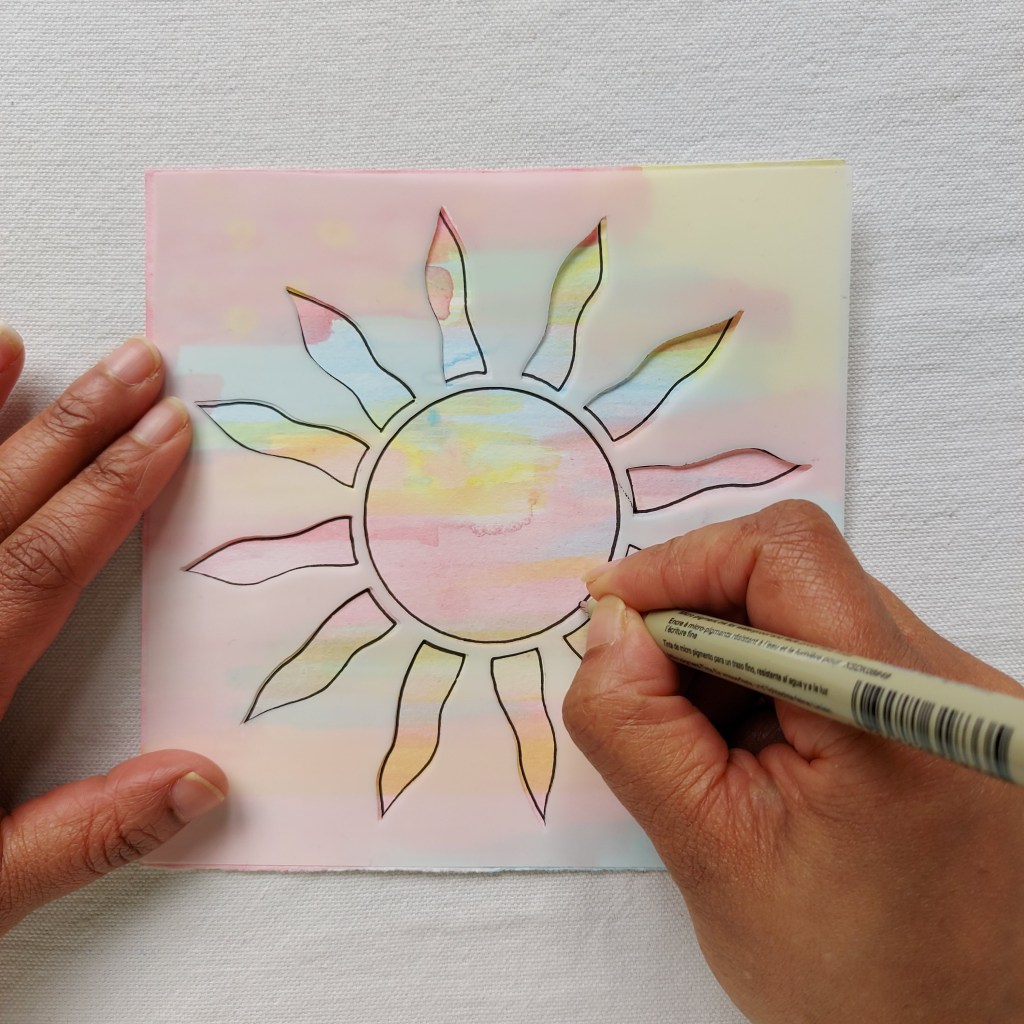


For the second, I added the markings and outlines using the stencils and a black pen to paper I had already watercoloured, added doodled details, cut them out and then glued them to a background. I use a combination of PVA craft glue and glue stick to adhere cut-outs to paper. For the background I glued the pages of an old dictionary to paper.


Outline onto plain paper. Fill outlines with watercolour.
I made pencil outlines using the stencils and filled the shapes and letters with watercolour paint (so therapeutic!). Once dry, I cut out the different elements, prepared a collage background and stuck the cut-outs onto the background using glue.

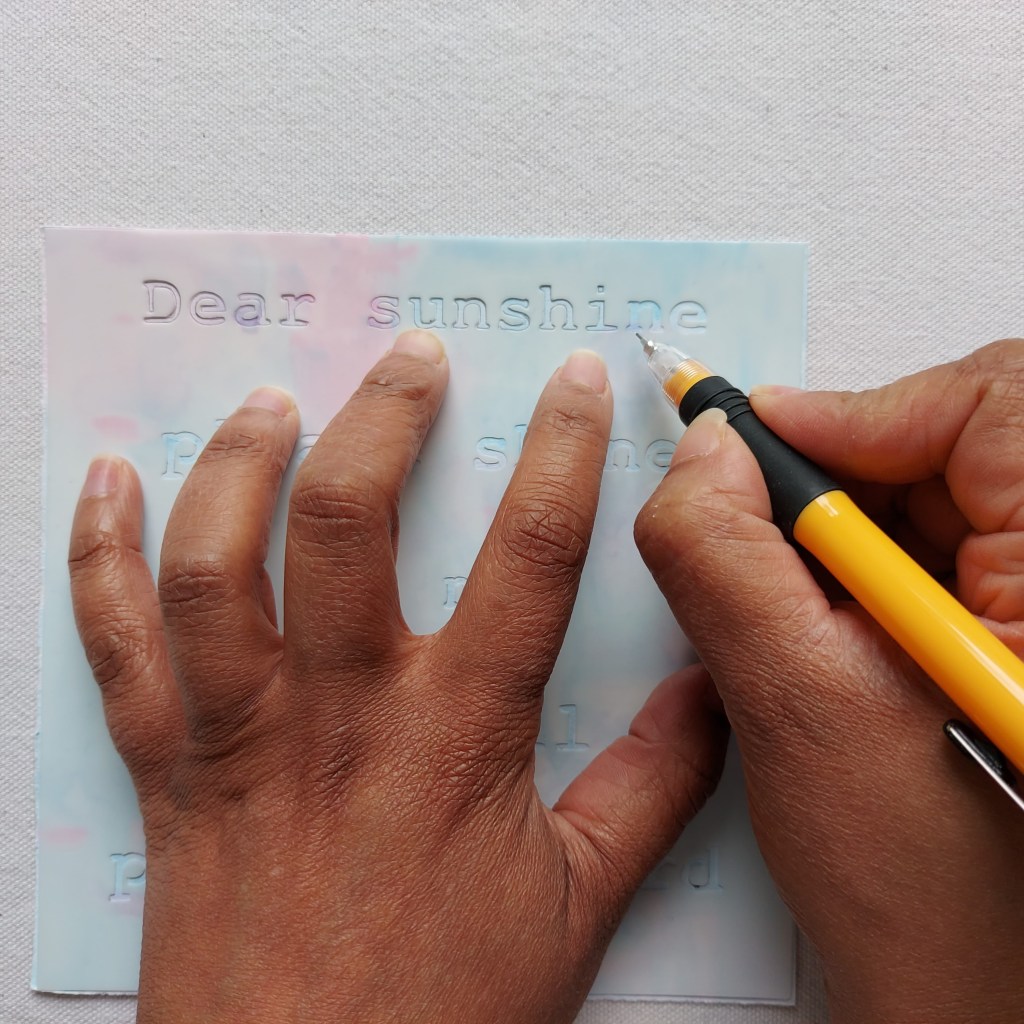


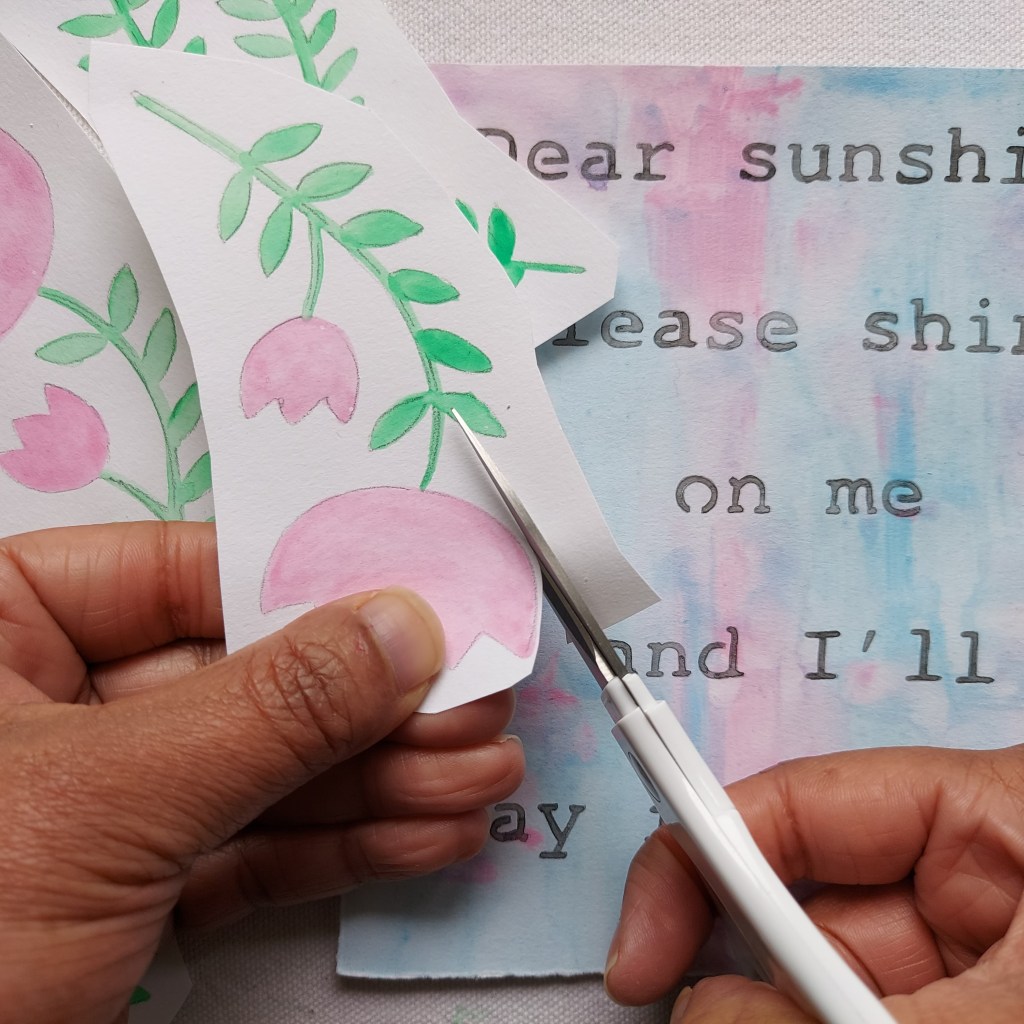


There are so many different looks and results possible depending on your style and the materials you use. For mixed media artists and art journallers, stencils can be an essential part of the practice. My art journal practice is developing and I’m excited to see how it evolves. I’ll be sharing that with you soon.
I can highly recommend the combination of stencilling and watercolour painting and/or doodling! It is such a relaxing pastime. You can buy my stencil set in my shop. I’ll be back next week with part 2 of this blog post, with stencil projects on fabric – my fave!
In the meantime, thank you for being here, take care and keep shining,
Love and warmth always,
Lucy
Xxxxxxxxxxxxxxxxxxzzzzzxxxxxx
PS – I have provided links in this post to products that I use. None of these are sponsored or affiliated in any way and I do not receive any type of rewards from these companies, including monetary.

 Lucylu dreams...